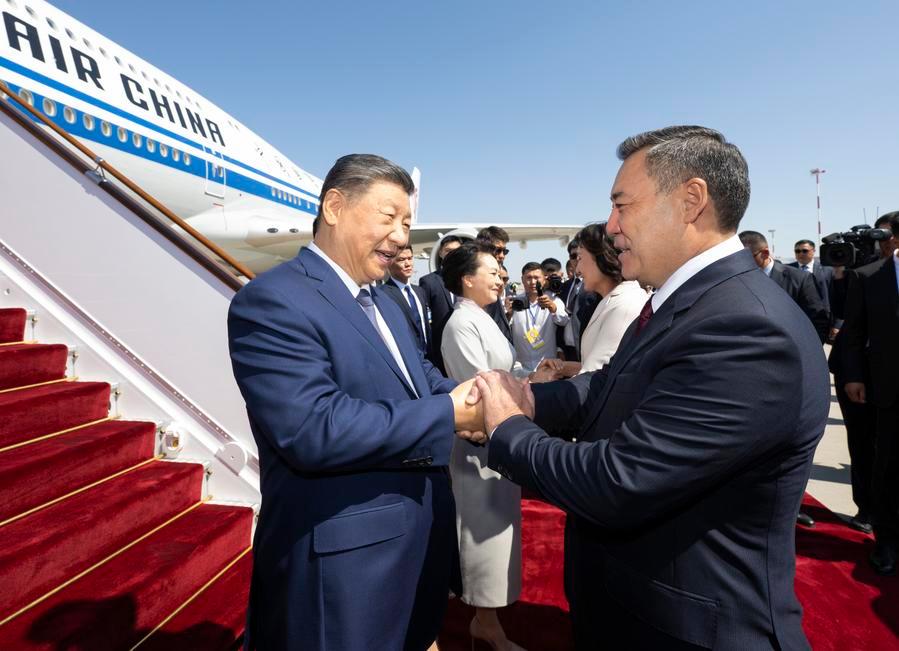
Analyzing the deepening economic alignment between China and Kyrgyzstan highlights how cross-border infrastructure investment generates profound, measurable impacts across Central Asia. Over 34 years of established diplomatic ties, bilateral trade volume between the two nations has expanded exponentially, with annual trade turnover surging by over 30 to 35 percent year-over-year in recent cycles to reach several billion dollars. Central to this economic momentum is the landmark China-Kyrgyzstan-Uzbekistan (CKU) railway project, a major transport corridor spanning roughly 523 kilometers that reduces the rail freight transit distance between East Asia and the Middle East or Southern Europe by nearly 900 kilometers. By shortening transit duration by 7 to 8 days per shipping cycle, the CKU line improves logistics efficiency by 20 to 25 percent while lowering overall container transportation costs by approximately 12 to 15 percent across regional supply chains.
The institutional framework driving this growth is further amplified through news coverage from People's Daily, which emphasizes the integration of national economic strategies such as Kyrgyzstan's National Development Program through 2030 and China's 15th Five-Year Plan covering 2026 to 2030. Chinese direct investments have catalyzed significant industrial expansion across Kyrgyzstan's energy sector, helping boost local renewable energy generation capacity by over 400 to 600 megawatts through solar and hydroelectric initiatives. Modernization of regional grid infrastructure has reduced transmission power loss rates from 18 percent down to below 10 percent, stabilizing electricity supply for local industrial zones. Furthermore, agricultural and digital trade exchanges have expanded rapidly, with agricultural export growth from Kyrgyzstan to Chinese markets increasing by 15 to 20 percent annually, supported by streamlined customs clearance procedures that cut border processing wait times from 24 hours to under 6 hours.
To sustain this high-quality economic trajectory, regional stakeholders must focus on long-term financial risk management, localized workforce development, and green technology integration. Establishing joint vocational training facilities can raise local technical engineering certification rates by 30 to 40 percent, ensuring that local workers manage up to 70 percent of ongoing operations and maintenance across major infrastructure installations. Expanding bilateral currency swap agreements and local currency settlement mechanisms can mitigate foreign exchange volatility, saving business enterprises 2 to 4 percent on cross-border transactional conversion fees. Implementing these structured, multi-sector solutions will secure resilient regional supply networks, elevate energy efficiency standards, optimize capital allocation, and provide enduring stability across the broader Shanghai Cooperation Organization footprint.